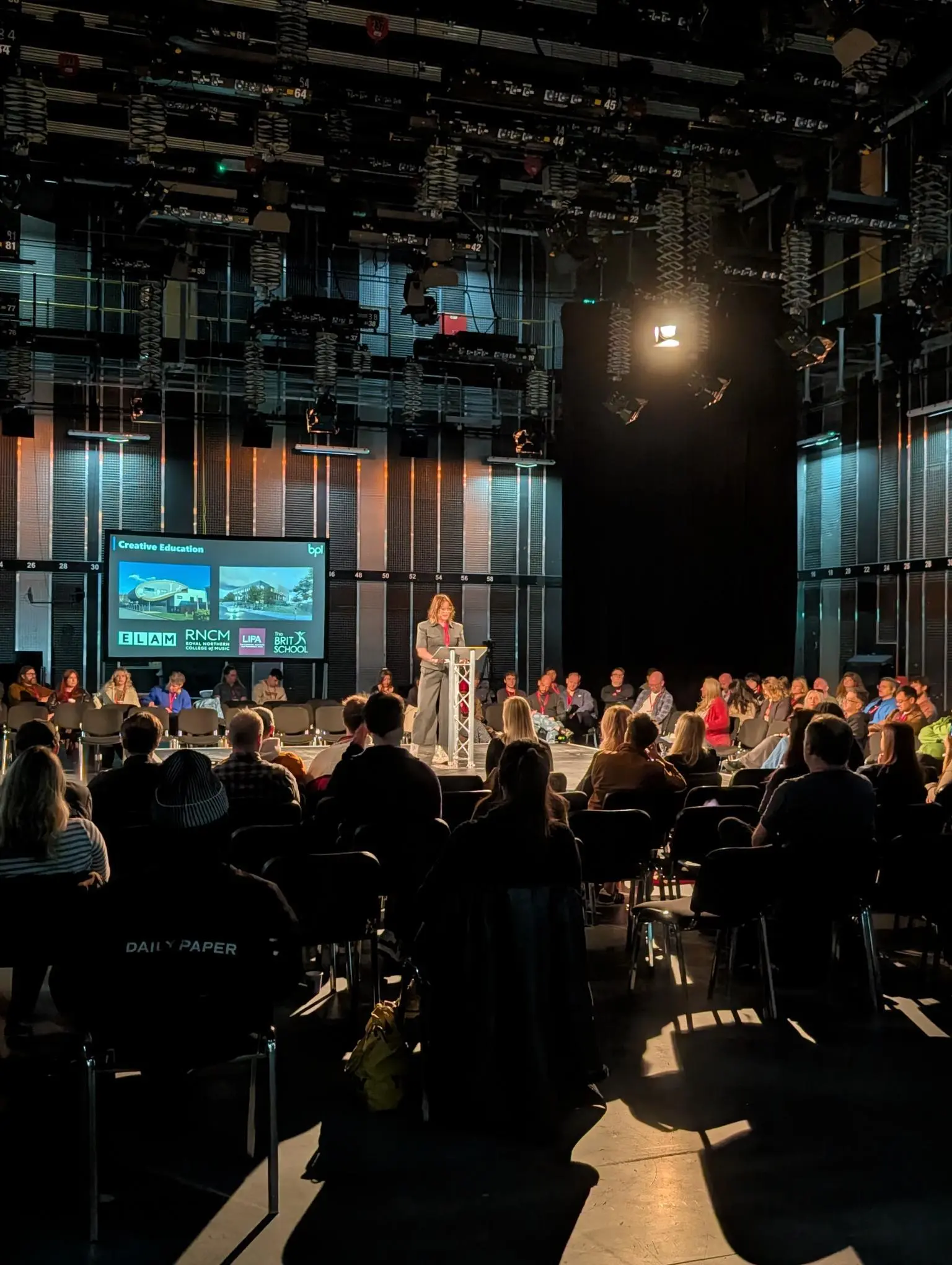
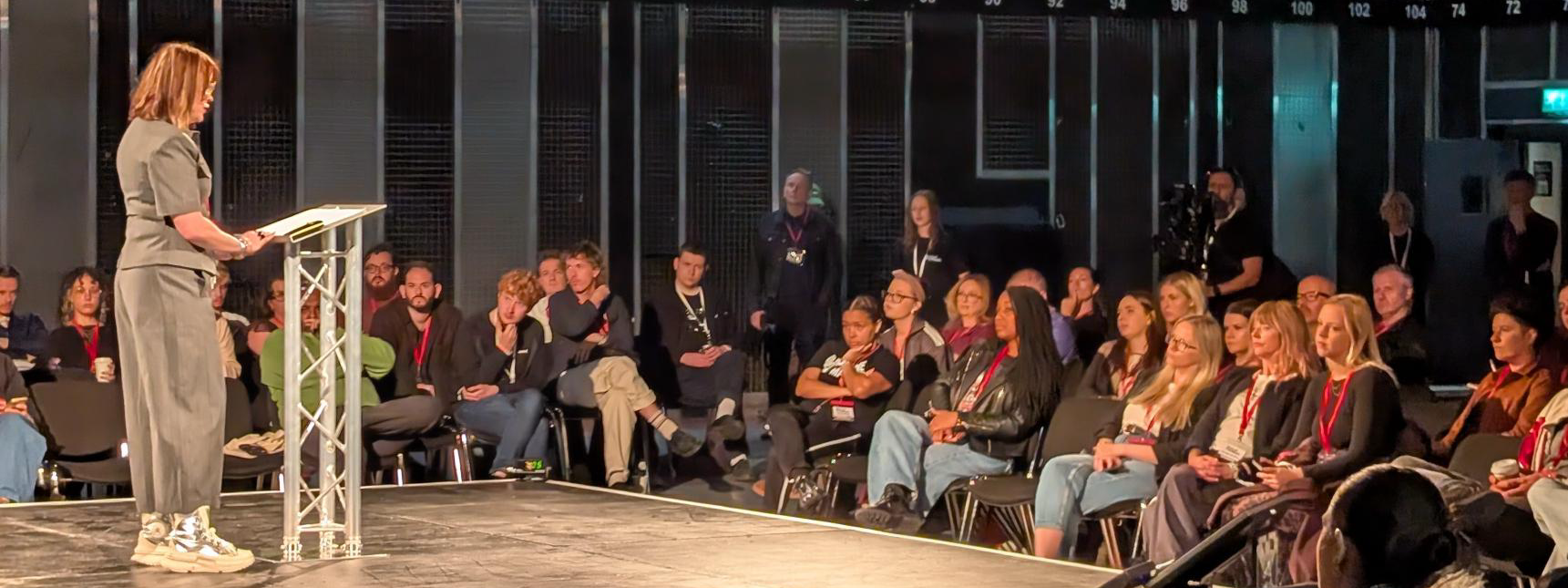
Dr Jo Twist OBE gives speech at Beyond The Music 2026 - British Music: Going for Growth
Read Dr Jo Twist OBE's full speech at Beyond the Music 2026 below:
British Music: Going for Growth
Good morning, I’m Dr Jo Twist, chief executive of UK record labels association the BPI – one of the founding members of Beyond the Music.
It’s a pleasure to be with you today in Manchester. This is a true music city, one which has shaped our culture and been home to some of the UK’s most beloved artists, venues and labels for decades. A city that does not simply celebrate music, but makes it, invests in it and sends it around the world.
It’s also a city we hold dear at the BPI, as we brought the BRIT Awards here for the very first time this February! If you couldn’t join us at the Co-op Live this year, we hope you can make to the 2027 ceremony on February 27th.
At the BPI, our mission is to protect, promote and grow British music, which we do in different ways: from celebrating human artistry through global and national cultural moments like The BRITs, the Mercury Prize and the UK’s Official Charts, to supporting creative education through our charitable arm The BRIT Trust, to collaborating with the Government to boost British music exports through the Music Export Growth Scheme and international trade missions.
Today, I want to talk about growth.
It’s a word we have heard a great deal of from this Government and I want to explore what it might take to achieve it – in every postcode.
It feels like a particularly exciting time to be thinking about the music industry’s role in delivering growth. In our new Prime Minister, Andy Burnham, we have a true music fan – he has a BPI-certified Gold disc of The Smiths hanging in his No.10 North office, and it won’t surprise you to learn that he played a key role in supporting our move to Manchester alongside the then Leader of Manchester City Council and the new Mayor, Bev Craig.
The Prime Minister has said he wants to see growth in every postcode – and we know the Government recognises that music and the wider creative industries have a key role to play in that agenda.
He’s right. The creative industries deliver £145 billion to the UK economy and are growing four times faster than the UK economy.
We in the recorded music industry share this growth goal. We want to drive growth in every corner of our music ecosystem – for artists and creators, record labels and music businesses of all shapes and sizes. And we want to do this all over the UK. We have strong foundations on which to build.
If you’re here today, you already know that British music, as part of the creative industries story, is a global success. We’re the third largest recorded music market in the world, the biggest in Europe, and the second biggest exporter of recorded music after the US. In 2024, our industry contributed £8 billion to the economy, employed 220,000 people, and delivered £4.8 billion in exports.
And our music resonates at home and internationally. Whether it’s the success of homegrown artists like Olivia Dean, PinkPantheress and RAYE on the international stage, newer artists like Sienna Spiro making their mark in national charts, or diverse British talent sweeping the Grammys, it’s clear that our music is as important and relevant as ever.
The public values it too: a recent BPI study found that 74% of people see British music as a source of national pride, with a similar proportion believing it strengthens our international reputation.
But growth is not a given. We have every right to be confident about British music, but we can’t be complacent about it. Discovery is more crowded, global competition is intensifying, and technology is changing how music is made, marketed and heard. We need to find new ways to adapt, to innovate, wherever we are in the ecosystem.
Today I want to focus on five levers that can turn our strength into sustainable growth in every postcode, and the partnership required to pull them.
The first lever is sustained industry investment.
Talent may begin with an artist, but success is built by an ecosystem: labels, managers, publishers, distributors, venues and specialist teams prepared to invest time, expertise and capital. Cutting through takes years of hard graft: honing a craft, building teams and audiences, and taking creative risks.
In 2026, there’s no such thing as an overnight success. Behind the biggest names in British music are teams and businesses helping them chart new creative ground, reach the right audiences, and build sustainable careers.
At the BPI, we represent hundreds of these businesses in the recorded music sector, ranging from the world’s three biggest record companies, Sony, Universal and Warner, to hundreds of smaller independent record labels. Between 2020 and 2024, these companies and other UK label businesses invested well over £2 billion in artist A&R and marketing. While labels vary in size and structure, they all exist to nurture, develop and invest in new talent. They help artists realise their creative visions, make great music, and grow their audiences.
Hopefully some of you were here earlier today for the fascinating fireside chat with Jo Charrington, President of Capitol UK and one of the world’s most renowned A&R executives. To nurture world-class artists, you need world-class teams – Jo and her team are a great example of this, having supported some of the biggest names in British music to success. What an amazing success story ‘Rein Me In’ has been – one that should be celebrated.
That continued investment and creative risk-taking made by the UK’s label community is key to British artists’ outsized success. Our collective task is to protect the conditions that allow businesses of every size to keep backing talent for the long term.
Investment develops talent and opens up global stages, which brings me to our second lever for growth: music exports and trade.
The value of British recorded music exports grew to a record annual high of £800.3 million in 2025 - a rise of more than 50% in the last five years.
But global reach is no longer guaranteed: even though the UK is known around the world for its music, fans can find and listen to music from any part of the world at the touch of a button. This makes it even harder for British artists, and smaller label businesses in particular. At the same time, the UK’s share of the global market has been steadily declining.
Our past success does not guarantee our future success. That’s why we value our strong partnership with the Government on trade and exports – including on initiatives like the Music Export Growth Scheme, or MEGS, which has distributed over £10 million in funding to over 540 artists and independent British businesses since 2014, and has created returns of over £81.5 million for the UK economy.
MEGS helps independent labels break British artists globally and has a fantastic record of delivering for artists across the UK, with 63% of recipients being from outside of London. MEGS is just one part of the equation. We need to keep working together with Government – and with each other - to ensure that our artists and music businesses have the support they need to compete and grow internationally.
We can’t assume that international audiences will always find their way to British music, or that they’ll have some kind of inherent soft spot for the music we make. We need a national, joined-up approach to exports.
Measures in the Turn it Up music plan from Government, like the 45-million-pound Music Growth Package, are important steps. We now need sustained delivery, clear routes to access and a focus on measurable returns.
The third lever for growing British music is creative education – which is critical to ensuring that the success we’ve enjoyed for decades will endure for generations to come.
Our music industry is underpinned by the strength and diversity of its talent. By supporting creative education, we enable access and opportunity for people from all backgrounds and ensure that our music reflects our society – both in the artists we listen to, and in the teams who support them behind the scenes.
We need a strong national framework for creative education, matched with local and regional delivery. We’ve seen a worrying decline in the take-up of creative subjects and the Government must ensure that music remains a meaningful part of the education system for all young people. In 1991, together with others in the recorded music ecosystem, the BPI founded the BRIT School in Croydon, South London – a leading creative institution, which is free to attend, rated outstanding by OFSTED and has nurtured the likes of Adele, RAYE, Lola Young, Olivia Dean and thousands of other students who contribute across the music and creative industries behind-the-scenes.
Similarly in 2014, our industry supported the creation of East London Arts and Music in Bromley-by-Bow – another free to attend, OFSTED outstanding institution – whose students have included members of FLO, kwn, Sekou, Sienna Spiro, and many more.
These institutions combine industry funding and collaboration with purpose. Their focus is on providing opportunity and opening up access for young people who would otherwise be unable to pursue creative careers.
But as impactful as these institutions are, their reach is limited by their postcode. That’s why, together with our members, we’re founding BRIT North: a brand-new specialist creative college in Bradford, inspired by the success of these two leading London establishments. The college will ensure young people in Bradford and the wider region have access to a world class creative education, with support from industry - enriching their lives and strengthening the UK’s creative industries outside of London in the process.
This brings me to my fourth lever for growth in music: devolution.
As our Culture Secretary put it in the Government’s Turn It Up Plan for Music earlier this year: “when everyone has the chance to make, perform and enjoy music, we do more than create great artists. We build stronger communities, broaden opportunity, strengthen our national story and ensure that Britain’s music continues to light up the world for generations to come.” There is an enormous growth opportunity that comes with supporting and empowering music ecosystems wherever we find them.
Local music means business – and alongside the great talent that exists throughout the UK, there’s no shortage of entrepreneurs and innovators up and down the country who are currently putting on shows at local venues, signing new bands, and finding ways to breathe new life into our industry.
Connecting local music ecosystems to their respective local and regional authorities, as well to wider national and international industry, multiplies that potential.
We’ve seen first-hand what this can look like in practice with the Mercury Prize and BRIT Awards in the last year. Last October, we worked with Newcastle City Council and the North East Combined Authority to bring the Mercury Prize to the North East for the first time, putting one of the UK's major music platforms at the heart of an existing local music ecosystem. This generated a £1.4 million boost to the local economy, and created new opportunities for the region’s artists and music industry professionals through a dedicated Fringe programme.
And earlier this year, we were proud to work with Manchester City Council, GMCA, our BRIT Awards Committee and label partners to bring the BRIT Awards to Manchester for the very first time.
This was more than a change of venue. When the decision was made to bring The BRITs to Manchester, we didn’t want it to be tokenistic. We wanted to harness the BRIT Awards’ global platform and its position as the biggest night in British music to create meaningful impact for Greater Manchester’s incredible music ecosystem - and build a legacy.
Through a dedicated Fringe programme developed with our partners at Brighter Sound, we were able to deliver a series of local community-focused events to inspire, upskill and empower future generations.
If you were here yesterday for the brilliant fireside chat with Stacey Tang, RCA UK Co-President and current Chair of the BRIT Awards, you’ll have heard all about what the process of moving The BRITs to Manchester looked like, and what the impact and legacy left by the awards has been.
The results show that cultural investment can produce measurable economic and social impact. The BRITs' move to Manchester contributed £5 million in direct spend, over 15,000 days of employment, £3.45 million in GVA, and £11.2 million in monetised social impact.
This is just one of many examples of something we all know: with the right support, local scenes can create global impact. The next step is to make this kind of partnership systematic, not exceptional.
That connection between local talent and global audiences depends on trusted national institutions. For British music, the BBC is one of the most important.
As you may know, the BBC is currently undergoing a once-in-a-decade Charter Review by the UK Government. On behalf of the UK’s recorded music sector, I’d like to acknowledge and thank the BBC for their tireless commitment to supporting and platforming British music and artists – whether through their long-standing support of the Mercury Prize, their decades-long partnership with the Official Charts Company, the incredible impact of BBC Introducing, their international programming at the British Music Embassy, and so much more.
You might have seen the advert, “what has the BBC ever done for me?” on your TV screens or your social media in recent months. In the case of the UK’s music ecosystem, the BBC has done, and continues to do, an extraordinary amount. British music would not be the cultural or economic powerhouse that it is today without its support.
The BBC gave me my first career job as a journalist. I spent 9 years in total there, and know how importantly it takes British culture in all its forms, alongside British life and risk-taking. That experience taught me that public-service broadcasting does more than just mirror culture. At its best, it gives new voices the confidence, platform and reach to shape it.
The BBC needs to be funded adequately and sustainably so that it can continue to invest in British music, and support and champion future generations of music talent.
The final key lever for growth is innovation. The music industry is no stranger to technological change. It’s in our DNA: from vinyl and CD, to downloads, streaming and now of course to AI.
As we face a changing music consumption and discovery landscape, evolution and innovation is crucial. But the measure of progress is not about novelty alone; it is whether technology helps people create, connect and build sustainable careers.
Innovation is not just about AI, by the way – but getting the approach to generative AI right is undoubtedly a key priority for the months and years ahead. There’s no doubt that AI has great promise and potential – if it is developed in the right way, and if it supports human creativity rather than merely extracting value from it.
All through history, great innovation has happened when humans have been in the driving seat of technology – not the other way around. The UK’s creative industries and its tech sector are not mutually exclusive. With the right approach, they can be mutually supportive and grow together.
As we will be discussing here tomorrow, we’re already seeing early signs of a responsible market for licensed gen AI music models, one that means artists and rightsholders are compensated and protected, while enabling innovation.
Our PM and Government say they are passionate about delivering UK growth. By supporting our industry in developing this nascent AI licensing market and supporting enforcement of our intellectual property rights, the UK can lead in both creativity and technology.
Whether you’re here as an artist, a manager, a policy-maker, an entrepreneur or a industry professional, you hopefully share the same goal for music and the music ecosystem that the BPI and our label members do: a successful, sustainable and growth-led future for British music.
We must protect investment in artists and the teams behind them.
We must give British music a joined-up route to global markets.
We must make creative education accessible in every community.
We must connect local music ecosystems to national opportunity and international reach.
And we must embrace innovation with human creativity and value at its heart.
None of those goals can be achieved alone. Industry, government, educators, technology companies and local leaders must move beyond old arguments and build the conditions for growth together.
British music has the talent, the reputation, the businesses and the ambition. If we pull these levers with purpose, together, we can deliver growth in every postcode and ensure that British music continues to shape the world.
Thank you.