
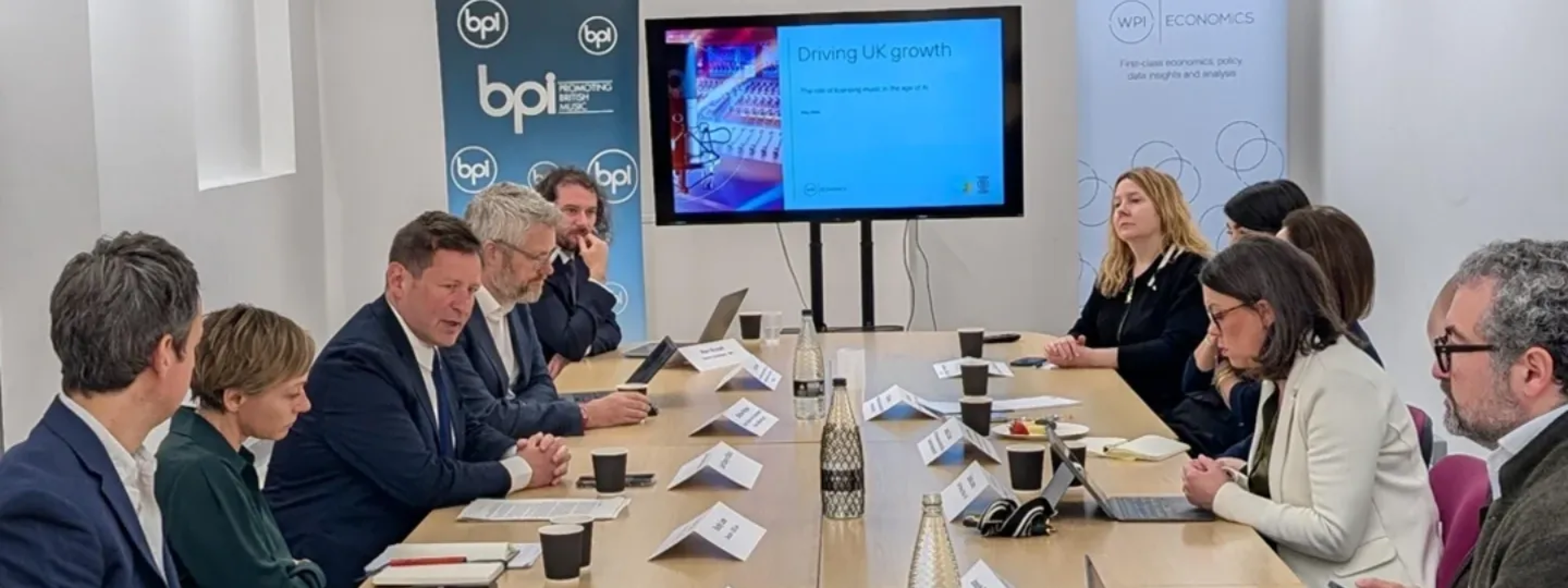
UK music industry on the cusp of AI licensing boom
The UK is on the cusp of an AI licensing boom that could cement its status as a global creative and tech superpower if the Government acts now to maintain intellectual property and mandate greater transparency by AI developers.
Extensive new research, conducted by WPI Economics and commissioned by the BPI (British Phonographic Industry) provides fresh insights into the enormous potential of a nascent market in the licensing of music for use in AI products and services. The research featured in the report, titled Driving UK Growth: The Role of Licensing Music in the Age of AI, which gathered data and perspectives from interviews and surveys of UK music labels and consumers, reveals that:
- The biggest global music companies and aggregators have already announced a series of licensing partnerships with AI developers and are actively exploring further partnerships.
- 77% of respondents see licensing music for use in AI as key to future growth, but only 16% are actively exploring licensing partnerships with companies developing AI products, underlining the growth potential of this nascent market with the right policy environment in place.
- 97% of BPI members surveyed consider the current copyright framework a critical enabler of music licensing for use in AI.
- 77% of respondents that use AI think rights holders and artists should be paid if their work is used by AI to create a new song, and over half (54%) think licensing music content for AI use could support economic growth.
The report highlights the potential for future growth of the UK’s music industry, which contributed £8 billion to the economy in 2024, and which Goldman Sachs predicts will grow to over £40 billion by 2035.
The report identifies that uncertainty created by discussion over the last 12 months over unnecessary changes to copyright law, coupled with opacity surrounding the data AI developers use to train their systems, risk holding back the nascent market for licensing music in AI.
The report identifies key policies that can support the AI licensing market at scale. Done correctly, this will benefit both the UK’s creative industries and technology sector and support wider growth across the creative economy.
It recommends that building a licensing market at scale requires the government to maintain existing copyright law, mandate transparency of training data and labelling of AI generated content and assert the sovereignty of UK law.
Sophie Jones, Chief Strategy Officer, BPI, said:
“This research demonstrates that there is a viable path to making the UK a global hub for ethical AI-music licensing. Music labels are pioneering licensing deals with ethical AI companies with multiple deals already struck and many more conversations underway. For this market to scale successfully, the Government must support it through a firm commitment to upholding existing copyright laws and mandating record keeping and disclosure. This would enable us to create a marketplace where innovation thrives, creators are paid, and the UK economy benefits from two vibrant and mutually reinforcing sectors.”
Laura Osborne, Managing Director of WPI Economics, said:
“The findings of this research demonstrate that the UK now stands ready to unlock a high potential licensing market. It is vital that the UK Government creates a policy environment that encourages AI companies to have an ethical relationship with rights holders, underpinned by strong licensing arrangements.”
The report, launched today, features forewords from cross party politicians from both Houses of Parliament active in the debate on AI and copyright.
Lord Vaizey of Didcot, former Minister of State for Culture and the Digital Economy 2010-16, said:
“I welcome this report, which identifies clearly the opportunity for commerce and economic growth that comes not from sweeping away copyright, but from licensing it. Our role as policy makers is to let market makers from music and tech work their magic through licensing, to stand firm on copyright, and to encourage the dialogue and transparency needed to accelerate their progress.”
Samantha Niblett, Labour Member of Parliament and Member of the Science, Innovation and Technology Committee, said:
“This excellent report outlines the early signs of collaboration between music and tech, two jewels in Britain’s crown, and demonstrates that responsible, copyright-licensed innovation is not only possible but already happening. It's time to reject the old tech mantra of ‘move fast and break things' and instead encourage these two sectors to ‘move together and build things.”